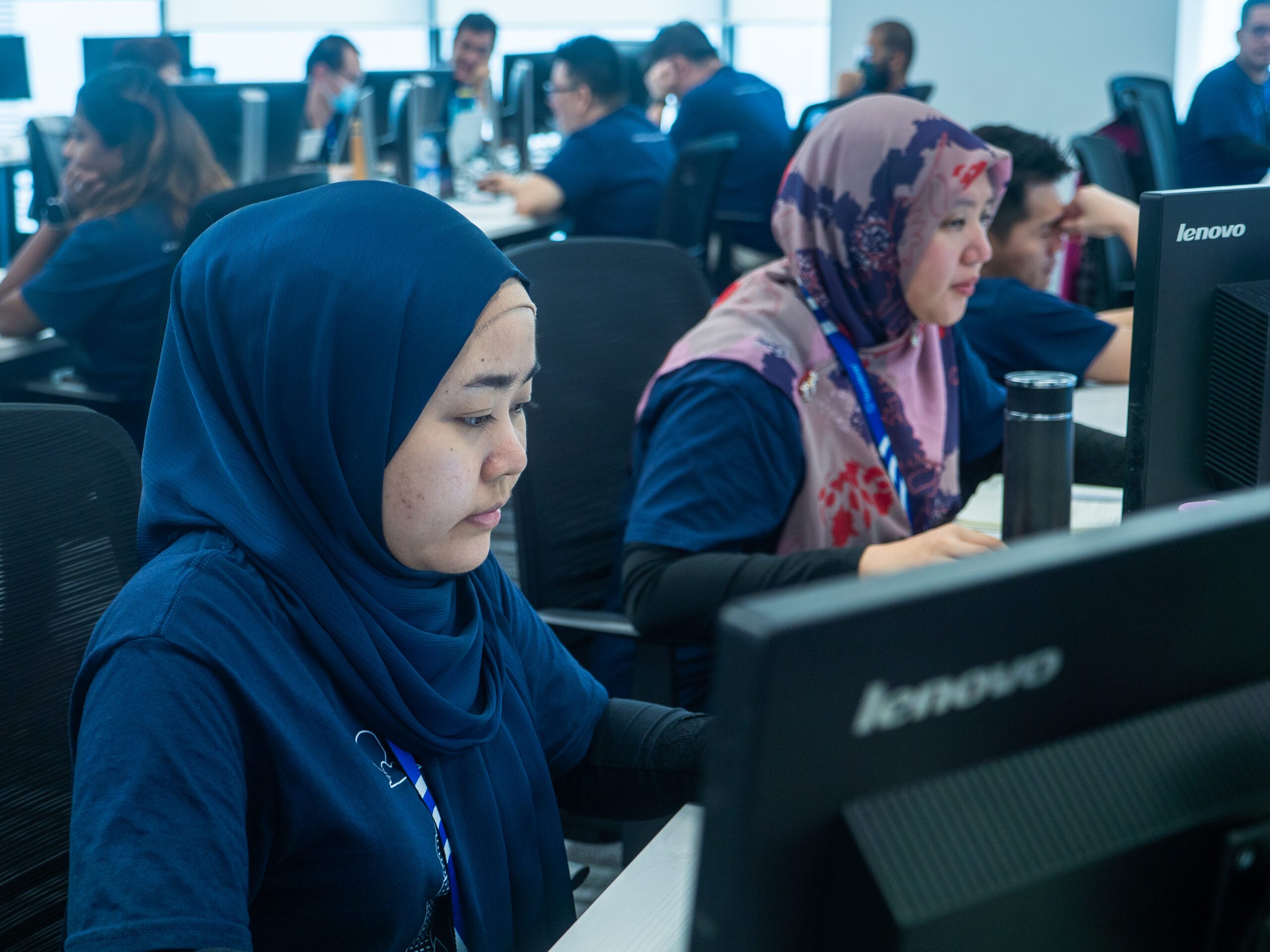












Indonesia has the largest labor force in Southeast Asia at 144 million workers. Employers must comply with the Manpower Law (Law No. 13/2003) as amended by the Job Creation Law (Omnibus Law) and implementing Government Regulation 35/2021 (GR 35/2021). Employers must register with BPJS Ketenagakerjaan (employment social security) and BPJS Kesehatan (health insurance).
What Are the Hiring Options for Foreign Companies in Indonesia?
An EOR in Indonesia is common because PT PMA registration involves minimum capital requirements (IDR 10 billion for foreign investment) and sector restrictions under the Positive Investment List. A PEO in Indonesia provides co-employment but requires careful structuring to avoid permanent establishment issues.
What Employment Laws Govern Hiring in Indonesia?
Indonesia's employment framework was restructured by the Job Creation Law (Law No. 11/2020, known as the Omnibus Law) and its implementing regulations. GR 35/2021 replaced the original Manpower Law provisions on severance, fixed-term contracts, outsourcing, and working hours. The Constitutional Court partially struck down the original Omnibus Law in 2021, but the government re-enacted it through Government Regulation in Lieu of Law (Perppu) No. 2/2022, later ratified as Law No. 6/2023.
The Ministry of Manpower (Kemnaker) oversees enforcement through provincial and district Manpower Offices (Disnaker). Key regulatory areas: contract types (PKWTT/PKWT), outsourcing rules, working hours, overtime, and termination with severance.
What Types of Employment Contracts Are Used in Indonesia?
Indonesia uses two contract types: PKWTT (Perjanjian Kerja Waktu Tidak Tertentu, permanent) and PKWT (Perjanjian Kerja Waktu Tertentu, fixed-term). The Omnibus Law significantly changed PKWT rules.
Under the Omnibus Law, PKWT employees receive compensation equal to 1 month salary for every 12 months worked, paid at contract end. This did not exist before. PKWT contracts must be in Bahasa Indonesia (bilingual permitted; Indonesian prevails). All contracts must be registered with the Manpower Office through the WLKP online system.
What Are the Mandatory Employer Costs in Indonesia?
BPJS Ketenagakerjaan covers 4 programs: work accident (JKK), death benefit (JKM), old age savings (JHT), and pension (JP). The JKK rate depends on industry risk classification (0.24% for low-risk offices to 1.74% for high-risk mining). BPJS Kesehatan is mandatory for all employees including foreigners with 6+ month assignments.
How Does Payroll Work in Indonesia?
Indonesia introduced a new PPh 21 calculation method (TER, or Tarif Efektif Rata-Rata) effective January 2024. The TER system replaces the previous monthly calculation with a simplified effective rate applied to gross income. Annual income tax rates: 5% (IDR 0-60M), 15% (IDR 60-250M), 25% (IDR 250-500M), 30% (IDR 500M-5B), 35% (above IDR 5B). For payroll details, see Indonesia payroll guide. Salary benchmarks at average salary in Indonesia.
What Work Permits Do Foreign Employees Need in Indonesia?
The Ministry of Manpower manages the RPTKA (Rencana Penggunaan Tenaga Kerja Asing) system. Employers must appoint an Indonesian understudy (pendamping) for each foreign worker. The DPKK fund ($100/month per foreign worker) is waived for directors/commissioners of companies with IDR 10B+ paid-up capital. For key hiring points, see notable points when hiring in Indonesia. For work permit details, see Indonesia work permit guide.
What Are the Termination Rules in Indonesia?
Indonesian employment law heavily protects employees. Termination must be through mutual agreement, court decision, or specific grounds under GR 35/2021. Severance calculations are among the highest in the world.
Statutory severance (UP) scale: 1 month (< 1 year), 2 months (1-2 years), 3 months (2-3 years), up to 9 months (8+ years). Long service pay (UPMK): 2 months (3-6 years) up to 10 months (24+ years). The multipliers in the table above are applied to these base amounts. Total termination cost for a long-tenured employee can exceed 30+ months salary.
Related Articles
Expand your team in Indonesia
Aniday handles compliance, payroll, and HR — so you can focus on growth.
What Are the Leave Entitlements in Indonesia?
Indonesia also provides special leave for marriage (3 days), child marriage (2 days), child circumcision (2 days), child baptism (2 days), spouse/parent/child death (2 days), and household member death (1 day). The Haji leave is unique to Indonesia, allowing one fully paid pilgrimage during employment.
What Are the Salary Benchmarks in Indonesia?
Indonesia has 38 provinces with different UMK (Upah Minimum Kabupaten/Kota). Jakarta's 2025 UMK is IDR 5,396,000/month ($337). Surabaya: IDR 4,725,000. Bandung: IDR 4,209,000. Tech salaries in Jakarta are 30-50% higher than secondary cities. Executive search in Indonesia targets C-level roles at IDR 50M-150M+/month. See top employment agencies in Indonesia.
What Is the Step-by-Step Process to Hire in Indonesia?
Step 1: Choose hiring structure. Register PT PMA with OSS/BKPM (4-8 weeks, IDR 10B minimum capital) or engage an EOR (3-5 days). Step 2: Obtain RPTKA and KITAS if hiring foreign workers. Step 3: Draft PKWTT or PKWT contract in Bahasa Indonesia. Step 4: Register employees with BPJS Ketenagakerjaan and BPJS Kesehatan within 30 days. Step 5: Set up monthly payroll with PPh 21 (TER method) and BPJS deductions. Step 6: Pay THR at least 7 days before the employee's religious holiday.
An employer of record in Indonesia eliminates PT PMA capital requirements and handles all BPJS, tax, and THR obligations.
Related Articles
Ready to get started?
start hiring in Indonesia with AnidayFrequently Asked Questions
Is THR mandatory?
Yes. THR (Tunjangan Hari Raya) is a mandatory religious holiday bonus of 1 month salary for employees with 12+ months of service. Pro-rated for shorter tenure. Payment must be at least 7 days before the employee's religious holiday.
What is the minimum capital for a PT PMA?
The minimum investment plan is IDR 10 billion (approximately $625,000). Actual paid-up capital can be lower for the first year. Certain sectors have higher minimums under the Positive Investment List.
Can foreigners be hired for any position?
No. The RPTKA system restricts foreign employment to positions that cannot be filled by Indonesians. Employers must appoint an Indonesian understudy for each foreign worker. Some positions are entirely closed to foreigners per Kemnaker decree.
How does the Omnibus Law affect termination?
The Omnibus Law (via GR 35/2021) changed severance multipliers, expanded termination grounds, and standardized the calculation framework. Total costs decreased compared to the original Manpower Law for some termination types but remain among the highest in Southeast Asia.