











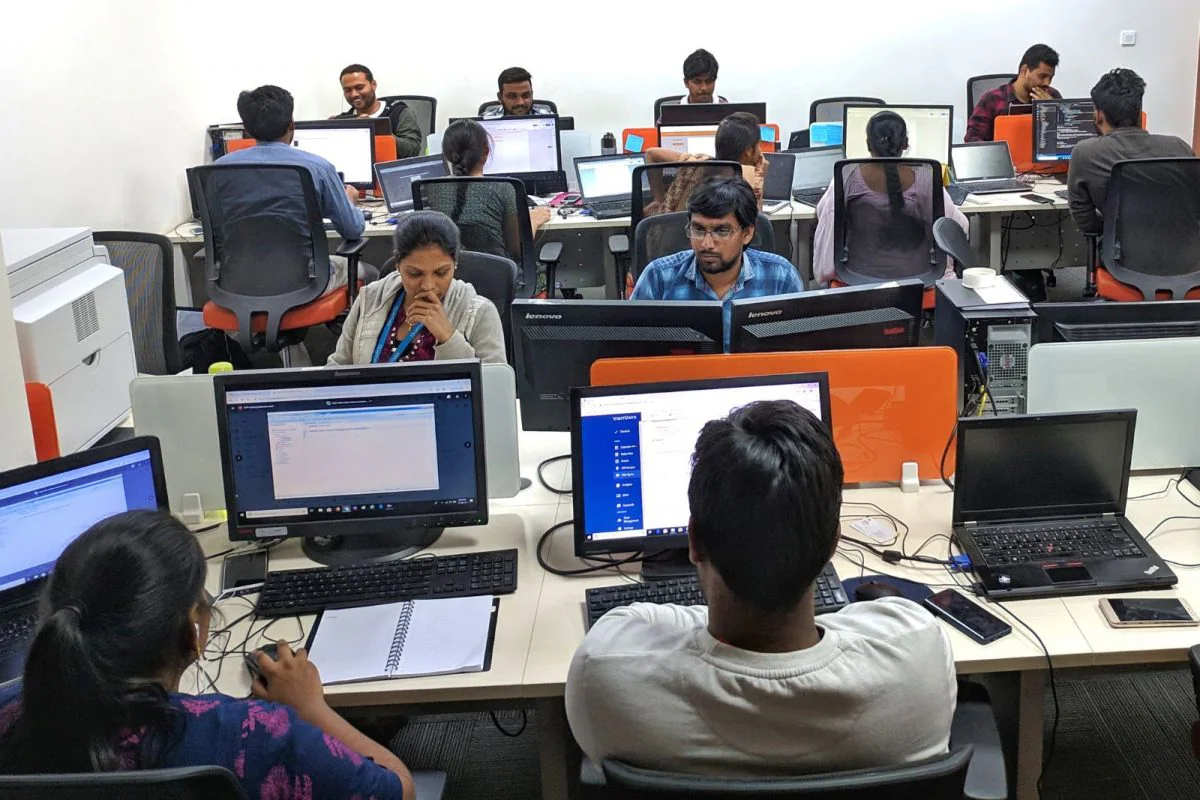
India has the world's largest labor force at over 500 million workers. Employment is regulated at both the central and state level, with recent consolidation under 4 new Labour Codes (yet to be fully enacted as of 2026). The primary central laws include the Employees' Provident Funds Act 1952, the Employees' State Insurance Act 1948, the Payment of Gratuity Act 1972, and the Industrial Disputes Act 1947. Employers must navigate both central and state-specific regulations.
What Are the Hiring Options for Foreign Companies in India?
An EOR in India is especially valuable because Indian labour laws vary by state. Maharashtra, Karnataka, Tamil Nadu, and Delhi each have distinct Shops and Establishments Acts governing working hours, leave, and overtime. The EOR entity holds the appropriate state registrations.
What Are the Mandatory Employer Costs in India?
PF is the largest employer cost at 12% of basic salary plus dearness allowance. The employer's PF contribution splits into 8.33% for Employees' Pension Scheme (EPS) and 3.67% for EPF account. ESI provides medical benefits for employees earning up to INR 21,000/month. Gratuity is payable after 5 continuous years of service at 15 days wages per year. For top agencies, see
top employment agencies in India.
What Types of Employment Contracts Are Used in India?
India does not have a single contract law governing employment. The Indian Contract Act 1872 provides the framework. Employment contracts should specify designation, compensation (basic + allowances), working hours, leave, notice period, non-compete clauses (limited enforceability), and confidentiality terms. Contracts are typically in English.
How Does Payroll Work in India?
Indian salary structures typically split into basic salary (40-50% of CTC), House Rent Allowance (HRA), special allowance, and other components. This split matters because PF, ESI, and gratuity are calculated on basic + DA only. Income tax uses a new tax regime (default from FY 2024-25): 0% (up to INR 300,000), 5% (300,001-700,000), 10% (700,001-1,000,000), 15% (1,000,001-1,200,000), 20% (1,200,001-1,500,000), 30% (above 1,500,000).
What Work Permits Do Foreign Employees Need in India?
Employment visa holders must register with the Foreigners Regional Registration Office (FRRO) within 14 days of arrival. The employer must obtain a PAN (tax number) for the foreign employee. For work permit details, see India work permit guide. India does not require a formal labor market test for Employment Visas, but the salary floor ($25,000/year) effectively limits eligibility to skilled professionals.
What Are the Termination Rules in India?
The Industrial Disputes Act (IDA) governs retrenchment. Establishments with 100+ workers (50+ under new Labour Codes) need government approval for retrenchment, closure, or layoffs. Retrenchment compensation: 15 days average pay per completed year of service. Gratuity (15 days wages per year of service after 5 years) is payable regardless of termination reason, except for misconduct involving moral turpitude.
Related Articles
Expand your team in India
Aniday handles compliance, payroll, and HR — so you can focus on growth.
What Are the Leave Entitlements in India?
Leave entitlements in India vary significantly by state. The Shops and Establishments Act of each state defines earned leave, sick leave, and casual leave. The Maternity Benefit (Amendment) Act 2017 provides 26 weeks paid leave for the first 2 children and 12 weeks for subsequent children. Adoption leave of 12 weeks is also mandated. For India-specific leave policies, see
India holiday and leave entitlements.
What Are the Salary Benchmarks in India?
India uses CTC (Cost to Company) as the total compensation metric, which includes basic salary, allowances, PF employer contribution, and gratuity accrual. Take-home salary is typically 70-80% of CTC. Bangalore and Hyderabad lead tech salaries. Mumbai dominates financial services. GCCs (Global Capability Centers) now employ 1.7 million+ people in India with premium compensation.
For senior roles, executive search in India targets C-level positions at INR 50L-2Cr+ annually.
■Related Articles
Ready to get started?
Aniday's EOR in IndiaFrequently Asked Questions
Do all Indian states have the same labour laws?
No. India has central labour laws (PF, ESI, Gratuity, IDA) that apply nationwide, but each state has its own Shops and Establishments Act governing working hours, leave, and registration requirements. Karnataka, Maharashtra, Tamil Nadu, Delhi, and Telangana each have different rules.
What is CTC (Cost to Company)?
CTC is the total annual cost of employing someone, including basic salary, allowances (HRA, conveyance, special), employer PF contribution, gratuity accrual, and insurance premiums. Net take-home is typically 70-80% of CTC after PF, ESI, and tax deductions.
Is gratuity mandatory?
Yes, under the Payment of Gratuity Act 1972, all establishments with 10+ employees must pay gratuity to employees who complete 5+ years of continuous service. Amount: 15 days wages per year of service (capped at INR 20 lakhs).
Can foreign companies hire contractors in India?
Yes, but misclassification risk is significant. Indian tax authorities and labour courts examine the nature of the relationship (control, integration, economic dependence). If deemed an employee, the company faces PF/ESI back-payment, penalties, and potential permanent establishment exposure.