



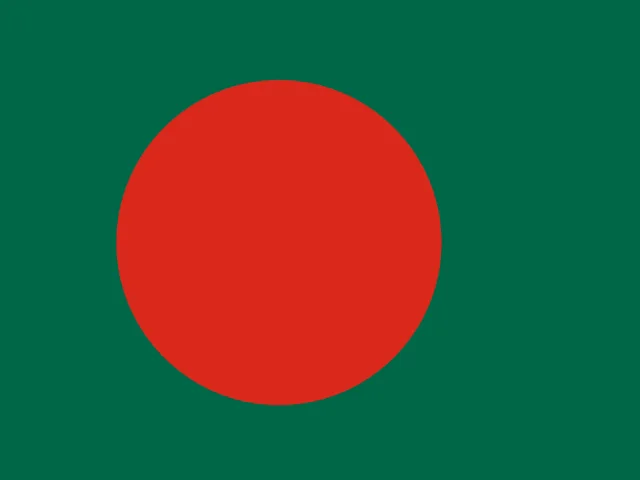
Bangladesh has a labor force of 73.4 million workers, with a national minimum wage varying by sector (garment sector: BDT 12,500/month effective December 2023). Employment is governed by the Bangladesh Labour Act 2006 (BLA), amended in 2013 and 2018, and the Bangladesh Labour Rules 2015. The Department of Inspection for Factories and Establishments (DIFE) under the Ministry of Labour and Employment (MOLE) oversees enforcement.
What Are the Hiring Options for Foreign Companies in Bangladesh?
An EOR in Bangladesh handles registration with BIDA (Bangladesh Investment Development Authority), DIFE compliance, and all statutory contributions. Entity registration requires BIDA approval for foreign-owned companies.
What Are the Mandatory Employer Costs in Bangladesh?
Bangladesh does not have a universal social security system comparable to SSS (Philippines) or BPJS (Indonesia). The provident fund is mandatory only for specific directed industries. Most private employers establish voluntary provident funds with 3-5% matching. Income tax follows progressive rates from 0% (first BDT 350,000) to 30% (above BDT 3,800,000). Non-residents pay 30% flat.
What Types of Employment Contracts Are Used in Bangladesh?
The BLA categorizes workers as: apprentice, substitute (badli), casual, temporary, probationer, permanent, and seasonal. All employment contracts must include: nature of employment, designation, wages, hours, leave, and termination conditions. Contracts are typically in Bengali and/or English.
What Are the Termination Rules in Bangladesh?
Notice periods in Bangladesh are among the longest in the region: 120 days for monthly-paid permanent workers (or payment in lieu). Compensation for termination without cause: 30 days wages for each completed year of service. Gratuity under BLA: 30 days wages per year after 10+ years (for non-provident fund members) or 14 days per year (for provident fund members).
What Are the Leave Entitlements in Bangladesh?
What Are the Salary Benchmarks in Bangladesh?
Bangladesh is the world's second-largest garment exporter. The garment sector minimum wage is BDT 12,500/month. IT sector salaries have grown rapidly with 30+ tech parks and Digital Bangladesh initiatives. Dhaka concentrates 60%+ of professional employment.
Related Articles
Expand your team in Bangladesh
Aniday handles compliance, payroll, and HR — so you can focus on growth.
What Work Permits Do Foreign Employees Need in Bangladesh?
Foreign workers need: (1) Security clearance from the Ministry of Home Affairs, (2) Work permit from BIDA, and (3) E-visa endorsement. Processing takes 3-6 weeks total. The BIDA work permit requires a 4:1 Bangladeshi-to-foreigner employee ratio. Maximum income tax: 30% flat for non-residents.
■Related Articles
Ready to get started?
Aniday's EOR in BangladeshFrequently Asked Questions
Can foreign companies own 100% of a Bangladeshi company?
Yes, 100% foreign ownership is allowed in most sectors. Registration with RJSC (Registrar of Joint Stock Companies) and BIDA approval required.
What is the minimum wage in Bangladesh?
There is no single national minimum wage. Wages are set by sector-specific Minimum Wage Boards. Garment: BDT 12,500/month (2023). Other sectors vary. The next review is expected in 2025-2026.
Is overtime pay mandatory?
Yes. Overtime is paid at 2x the ordinary rate under BLA. Maximum overtime: 2 hours/day, total working hours not exceeding 60 hours/week.